
One of the few topics in an average American household that can ignite a family civil war between parents and children is video games, according to a systematic review published in 2025. Over 67% of parents are worried that their children are addicted to video games, and 79% worry about excessive gaming, per The Times. According to the Pew Research Center, 97% of American teenagers play video games, underscoring gaming’s impact on the American population, especially among younger generations.
The brain game
What causes all of this, however, is a tiny and seemingly insignificant chemical. Dopamine, a neurotransmitter, is made in the brain. Commonly known as the “pleasure chemical,” it is, in fact, the “want” chemical. Dopamine drives the urge to make decisions, and when released, can cause pleasure, which is why it is associated with joy and contentment. However, in gaming, entertainment and social media, dopamine-driven reward systems are often exploited to reinforce addictive behavior, turning dopamine into an “evil” chemical.
Another part of the brain that plays a key role in instigating the “civil war” is the prefrontal cortex. Located in the frontal lobe, the prefrontal cortex, one of the last parts of the brain to mature, controls rational thinking and decision-making, especially the consideration of long-term consequences and benefits.
In teenagers, the prefrontal cortex is still developing and is highly influenced by decisions made during this period, making it a critical stage for building strong self-control. The prefrontal cortex determines a person’s character and has an immense impact on their daily life. Only maturing in the mid-20s, it continues to improve into the late-20s.
The final boss: Reward loop
When elevated dopamine activity coincides with reduced prefrontal cortex control, a trigger can initiate a self-reinforcing reward loop.
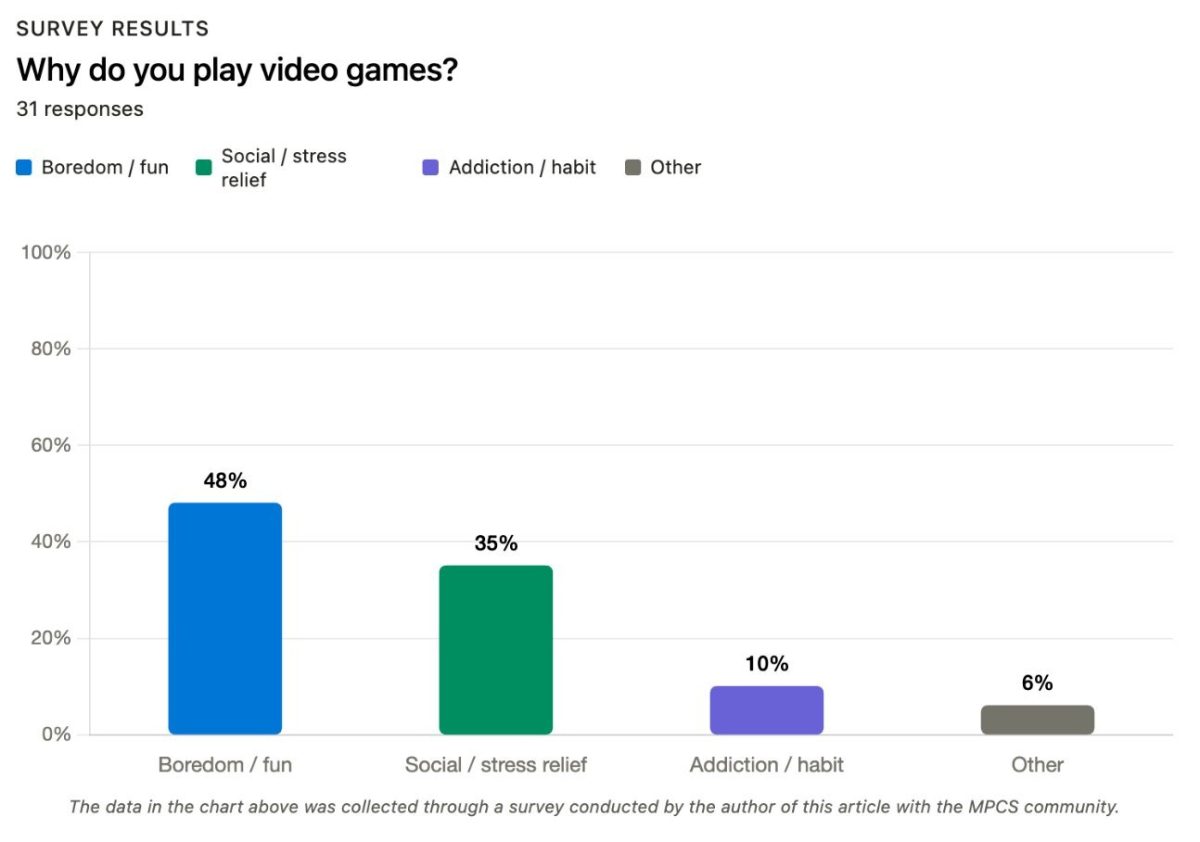
Boredom and social interaction are among the most common triggers for gaming; in a survey conducted by the author within the MPCS community, over 83% of teenagers identified these two factors as primary triggers, as shown below.
The trigger lures one in, and a reward, such as a loot box, is revealed to keep the player hooked.
One ironic mechanic in the renowned Minecraft is the Strider, which carries players across lava when they hold a “Warped Fungus on a Stick.”
In reality, this dynamic is reversed: the true “player” is the game company, which benefits from the user’s meaningless labor. That labor effectively “transports” the company toward a well-structured balance sheet that earns shareholder approval.
The Strider’s second function deepens the irony. Feeding it “Warped Fungus” restores the Strider’s health when it is “harmed,” mirroring how players are “fed” rewards by the game to maintain engagement when they become bored or disengaged.
Once your brain has learned that playing the game rewards you, it wants you to do it again and again, as it craves the easy joy the reward gives you.
This is what leads teenagers to lose their “willpower,” which is controlled by the prefrontal cortex, when gaming.
Just like an engine in a hydrolock, the prefrontal cortex is unable to handle the large amount of dopamine that rushes into it. This is because the teenagers’ prefrontal cortices are still developing, making them too weak to handle the dopamine stampede. Industries like gaming, social media and entertainment rely on a dopamine-driven “reward” loop, from which they gain tremendous financial “reward.”
When such reward loops are established, they lead to excessive gaming, which can be highly detrimental to teens’ physical and mental health. Negative aspects of excessive gaming include sleep disruption, reduced attention span, higher rates of anxiety and depression and much more.
Many teenagers’ parents, for various reasons, restrict their children from playing video games. Yet restrictions are of little use once the reward loop is established, as many teenagers will lie or cheat their way into playing games.
One teenager says that he “lied many times” and “acted like I was studying” to prevent his parents from realizing he was gaming. According to him, he would play games such as Roblox or Brawl Stars from 10 p.m. to 6 a.m. the next day, even though he had school at 8 a.m.
Such behavior, resulting from gaming addiction, not only affected his overall health but also prevented him from accomplishing his goals after school, as he took long naps that did not compensate for his lack of sleep and further reduced his productive time. Another teenager stated that his mom “fiercely disapproved” of gaming, but he still played games when she could not see his screen.
A common parental response to teens’ disguised excessive gaming or lying to play games is to view them as immoral. The reality is that the dopamine waves shut down the prefrontal cortex, which governs reasoning, rendering it useless.
Over time, as the routine establishes itself, dishonest behavior becomes part of it. As parents realize, at some point, as the “war” becomes a quagmire, simply banning games is not effective, as the reward loop has already corrupted the innocent mind of the child. Instead, solving the mystery of the trigger and preventing it from occurring could lead to true resolution.
Hack the loop
The most effective intervention is to disrupt the trigger before the routine begins, while the prefrontal cortex is still online.
During a gaming session, the player’s dopamine levels are high, and the prefrontal cortex is offline, making it impossible for the teen with an underdeveloped prefrontal cortex to stop gaming or make the right decisions.
For these reasons, setting a timer is ineffective. Solely relying on one’s will, a common response to the inability to decide while in the moment, is futile.
The strength of the prefrontal cortex is the strength of one’s willpower. Even deciding before a gaming session can be ineffectual, as dopamine levels can be high or even higher than during a gaming session, as your mind constantly craves the excitement.
What works, however, is to help the teen discover an activity that interests him or her and keeps them engaged, so the easy dopamine rush from gaming is not as appealing. Such pastimes include reading a book, solving puzzles, working out, doing a hobby or learning a new concept.
Understanding the science behind gaming addiction is the first step towards fixing it. Teenagers are not broken, lazy or immoral, but are encumbered with a still-developing brain that makes them easily succumb to designs engineered by neuroscientists and psychologists to exploit the prefrontal cortex’s weakness.
Being aware of the mechanism that causes gaming addiction will help teenagers and parents to take proper steps to identify and prevent triggers that ignite the gnawing urge to play.
With the right mindset and approach, the brains of the future generation have the chance to break out of the loop of easy dopamine rush and to strengthen their minds as they face new challenges.